Showing posts with label Adolescent Youth Development. Show all posts

Thursday, September 25, 2014

Dr. Baggett Responses to Your Questions!

Hello all! As I had stated in the answers to the ticket out questions in an earlier session, Dr. Baggett has responded to your questions for here. Below are your questions and his responses!


Did Brown vs. Board of Education help improve vocational education for African Americans?

The Brown vs. Board of Education sat the judicial precedent for integration—that separate but equal was unconstitutional according to the 14th Amendment of the Constitution.  Very little changed in the real world of secondary education with this decision.  It wasn’t until the Civil Right Act of 1964 that real changes began to take place.  The “Cotton Belt States” still resisted change and the US Government had to use military force to make sure the law was enforced.  Hence, there were turbulent times in this region between 1965 and 1969. The majority population knew that African American schools were not equal because they did not support these schools appropriately compared with the other schools.  However, given the limited resources available, minority schools did an excellent job!  Desegregation helped to level the playing fields relative to the availability of resources.  
After 1964, minority schools were closed and minority students were integrated into majority schools.  There was a huge emotional letdown among minority high school graduates when they found that their alma mater no longer existed.
How did you feel about the FFA and NFA merge?  

Most NFA members were not happy with the merger and I was not exception.  Many NFA members felt that the merger was really a hostile take-over.  There was a vacuum of identity.  NFA members did not have an affinity for FFA.  The 1890 Land grant colleges and universities struggled in accepting FFA and did not embrace collegiate FFA chapters to replace NFA.  Few, if any, 1890 institutions developed collegiate FFA chapters.  My alma mater, NC A & T State University, developed the Ag Ed Association as a replacement for collegiate NFA.
Would things have been better if there would not have been segregated school, or would minorities have suffered more "persecution"?

Segregation was wrong on so many levels and it made a lie of the statement “One nation under God…” because the United States was two nations—one African American and a white.  Segregation was institutional racism in the truest sense of the word and everyone paid dearly.  Slavery was wrong and precipitated segregation where African men, women, and children were treated as property.  Persecution and abuse was used to keep slaves and eventual African Americans in their place as second class people not worthy of citizenship.
Life and education definitely would have been better if schools were not segregated.  Integrated schools exposed the races to one another and fostered racial harmony and respect.  Children of all races grow up, experience the same environment, face similar challenges, and achieve success or failure together.  These children see that the old stereotype are invalid and that skin color does not make a lot of difference.  Having equal access to the resources allows all to develop and grow at one’s interest and capability.  Some, both black and white, will make the most of these opportunities and excel while others will do the minimum.

Session 9: What is a Program of Activities?

Session 9 was a session of awesomeness! Ms. Jenna Genson was with us today speaking about Program of Activities!

Here is the link to the recorded session with Jenna! https://meeting.psu.edu/p84sjvot0ly/
What are you curious about?

  • What are the hours that you work to judge the chapter awards?
    • There are several options for Penn State students to judge National Chapter awards!  Email Janae Herr kjh5370@psu.edu for more information!
  • How to format our expectations of the POA
    • 3 examples of past AEE 311 POA's have been uploaded to ANGEL so check them out!  Also, this week's Weekly Web Wonder has lots of example POA's.
  • Job opportunities at National FFA
    • Check out this link for information on job opportunities at National FFA
  • How do I create a blog?
    • Great question!  There are lots of platforms for blog, our favorite is Blogger.  It is through Google so all you need is a gmail account and you are ready to go.  One of the first steps will be naming your blog, which can be tricky but is essential!  Check out this link for some tips.
  • Does each state have enough people to apply for the National Chapter Award each year?
    • Check out this link to see all of the 2014 National Chapter Award Recipients from each state!
  • Continuing to learn about FFA
  • How do I do all of this as an Ag Teacher and FFA advisor and still have time for life outside of my job?
    • This would be a great question for Ms. Stephanie Joliff during our next session.  Ms. Joliff has an incredible program in Ridgemont,OH and balances a family in there as well!
  • How in depth is the budget in a POA?
    • Check out the ANGEL & Web Wonder examples.  The budget is usually the chapter's budget for the entire year so you will need to anticipate any income or expenses. 
  • All of the work I need to do
    • Review the syllabus and utilize your TA's!
  • Working with my cooperating center on their POA
    • A great place to really get a handle on what implementation of a POA looks like!
  • I am still a little confused as to what is required in a POA
    • Check out the examples and email your TA's!
  • Who in PA has qualified or been awarded the National Chapter Award?
What did you learn?
  • Program of Activities (POA)
  • Committees included in a POA
    • Student, Chapter and Community Development Committees
  • National Chapter Awards
    • Application Process
  • Creating a successful POA
  • Importance of a POA
  • "You are a coach, not a parent!"
  • POA implementation in the community
  • POA resources
  • Duties of the Sentinel
What do you want to learn more about?
  • Next week's guest speaker
    • Ms. Stephanie Joliff from Ridgemont, OH, speaking about POA Implementation.  Come with great questions!
  • Format of the officer selection plan
    • Check out the ANGEL examples
  • Opportunities on the National FFA trip
    • Talk to one of our coordinators about opportunities for PSU students at National Convention! kjh5370@psu.edu
  • What does the National Chapter Award application look like?
    • Check out this link to the Application for the National Chapter Award
  • Georgia & Texas Agriculture Programs
    • Here are links to some information on Agriculture Education in Georgia and Texas!

Friday, September 5, 2014

Session Four- What is an FFA Advisor?


Session 4 Ticket Out
                Today AEE 311 had the opportunity to hear the FFA Creed given by Bailey Hoyt from Central Colombia High School and talk to Mr. Doug Brown about his program. Everyone also had the opportunity to ask questions to both Mr. Doug Brown and Ms. Bailey Hoyt about their agricultural program and interests.

What are you curious about?

  •          I am curious about other opportunities in Ag Education other than teaching.

o   The opportunities with an Ag Education degree are endless! Here is a link to the Penn State College of Agricultural Sciences webpage that gives examples of students who have graduated with an Agriculture and Extension Education degree and are working outside of the classroom: http://aese.psu.edu/majors/aee/careers .

  • ·         Being an agriculture teacher.

o   Explore the major through Penn State a little more and talk with Dr. Foster and Dr. Ewing. It is also beneficial to review some teacher blogs on their experiences or go and shadow an agricultural educator.

  • ·         Is any one strategy more important than the next strategy?

o   No, all the strategies are equally important.

  • ·         What are some ways to get students initially involved in an agricultural program?

o   Students need to “buy in” to what you are doing as a program. If students do not see that the agricultural program is accomplishing something and having fun while doing it, they will be less likely to join. Promote agricultural education throughout your school and show students how awesome your program is, that will draw their attention.

  • ·         How the role of the advisor comes out in the classroom.

o   Remember that the advisor and the teacher are one in the same for the classroom. It is important that as the advisor and teacher, students are still being engaged while learning.

  • ·         Agricultural teachers experiences with students and fellow teachers.

o   The best way to answer this question would be to go find and talk to agricultural teachers about their experiences.

  • ·         More information on Central Columbia School District. It sounds like a great school.

o   Here is the link to the Central Columbia School District webpage: http://www.centralcolumbia.k12.pa.us/domain/325

  • ·         Finding more ways to get involved with other organizations at my cooperating center.

o   Talk to your cooperating teacher and see what suggestions they may have for other involvement outside of the classroom.

  • ·         Career pathway schools

o   Career pathways work as follows for each grade level:
§  7th grade: students will investigate pathways that interest them
§  8th grade: students will conduct a one-day job shadow of that specific job
§  9th grade: students select 1.5 credits toward their chosen pathway, prior to 10th grade they are required to pick their top two pathways
§  10th grade: students must select courses that match their pathway
§  11th grade: students must select courses that match their pathway and must job shadow in their career interest
§  12th grade: complete courses for pathway and complete exit interview

  • ·         How does agricultural education work in the classroom setting?

o   Agricultural education works very well in the classroom setting because it allows teachers to give students hands on learning experiences while still being in the classroom setting.

  • ·         Are there other CDE events that are only for freshman or specific grade levels?

o   FFA Knowledge and Creed Speaking are the only two CDE events that are for a specific grade level. The rest of the CDE events are open to grade levels 9-12. FFA Knowledge is not a National FFA CDE yet.

  • ·         How to “save” an FFA program that is failing.

o   To save a program, student involvement and interest is crucial. Publicize all the outstanding things the FFA program is doing, incorporate new events to draw members, and work with local businesses to gain community support.

  • ·         How do you promote your program & chapter to non-traditional audiences?

o   Public outreach events would be a great promotion for any FFA program or chapter. Events like community service activities or booths at community outings would get your program and chapter recognized by all audiences.

  • ·         How Mr. Brown uses technology.

o   Technology is used in the classroom for research, instruction and development of knowledge. Mac books, iPads, smart boards, and interactive videos are all used.

  • ·         At Central Columbia, how do both the high school and middle school ag science programs work together? Can middle school students be part of FFA in Central Columbia?

o   Yes, both the high school and middle school programs work together to see what students in grades 5-8 need before coming to the high school. While some schools do allow middle school students to be part of their FFA Chapter, Central Columbia does not allow this. Middle school focuses on very simple and base knowledge that students can expand upon in high school .

  • ·         What are some projects that the 11 strategies encompass?

o   Some examples could be SAE projects, community service events, or mentoring programs. The best way to find projects are to come up with your own to encompass all the strategies and skills you want.

  • ·         The story about Dr. Foster’s competitiveness.

o   Meet with Dr. Foster to ask him yourself about this question.

  • ·         How many schools participate in the career path aspect of learning.

o   There is not a definite number of schools

What did we learn?

  • ·           I learned when you become a teacher to balance your home and school life.
  • ·         About Mr. Brown and Bailey
  • ·         Creed CDE- what it is, how it is given, and how to practice.
  • ·         The difference between ag teachers and FFA advisors.
  • ·         Some aspects that go into being an ag teacher and FFA advisor.
  • ·         FFA involvement with other organizations is beneficial.
  • ·         Different strategies to promote/create successful agricultural education programs.
What do you want to learn more about?
  • ·         Chapters that started from the ground up.
o   Bald Eagle FFA Chapter is a great example of a new program that was recently chartered by the PA FFA.
  • ·         FFA
o   We will be discussing FFA some in AEE 311, but for more information look into taking AEE 100. Also refer to the manuals that were given at the beginning of class and check out the National FFA website. FFA meetings are usually predetermined by the chapter prior to the start of the year.
  • ·         Other CDE Projects
o   There are 25 total CDE events offered at the National FFA Convention. Here is a link so you can see all the different events available: https://www.ffa.org/programs/awards/cde/Pages/default.aspx
  • ·         Leadership in Agricultural Extension
o   Stay tuned for more of this to be discussed in class!
  • ·         How are the advisors working to increase student motivation and participation.
o   See above response.
  • ·         Examples of the 11 strategies
o   See above response.
  • ·         How the Central Columbia School works with career pathway learning.
o   See above response on career pathway schools.
  • ·         Central Columbia exit interviews students go through.·          
o   Students go through an interview with a panel of six judges. Two of these judges are faculty at Central Columbia, four are community members. Each interview covers the student’s course of action with career plans and future goals.

Thursday, August 28, 2014

Session Two: What are professional expectations?

After a great second session, we left class today equipped with the challenge of pushing ourselves and our students to ask the question "why?" and remain conscious of the status quo. Additionally, we identified reasons that we join organizations, mapped out the remainder of the course, and last but not least started our journey with AET! Let's challenge ourselves to use AET to it's fullest potential, feel free to contact any of us for fun ideas!

Ticket Out Responses Session 2:

  • What are we curious about?
    • Managing multiple project books in AET
      • Under "journal" at the top of the page after logging in,  click "develop your AET experiences" and then "add new." Once your experience is added, you can continue to enter more projects this way.
    • How to use the POA to recruit and retain students
      • When developing your POA implementation plan, one way to use it as a recruitment tool is to develop your standing committees in a way that is fun and inciting! For example, my implementation plan had very goofy name for each committee. Hold onto this question for our two sessions on POA. If you would like to take a look at my project, let me know!
    • If we develop that competition and championship attitude, how can we also cultivate an "other focused mentality"
      • Holy cow, this is a good question. I am hoping that Dr. Foster adds this thoughts to this one in the comments, but I would be happy to offer my personal feelings. If you are creating that "championship" mindset, why can't that include being champions of giving back? 
    • Why is adolescence viewed negatively?
    • How do you keep everyone involved in an organization?
      • We have a session dedicated to this in Decemeber!
    • Exploring the AET Website and my SAE journal
      • Make sure you check out the list provided in your assignment handbook to get a feeling of where to start!
    • AET Chapter website
      • This is available more so on the advisor features. Personally, I am hoping to get a feel for this as well. I should be people to add students for access to play around with the website. Any students who are interested, please contact me.
    •  Percentage of schools that use AET for record keeping.
      • I do not know if this number exists, but I can tell you that all states that have affiliation membership for ag education (meaning ALL ag ed students are also FFA members) have access to AET, including Pennsylvania. 
  • What did we learn?
    • There is a lot more to AET than recordbooks!
    • Info about AET
    • I learned why students want to join an organization
    • Academically you are considered an adolescent between 11-21 years old
    • How to use AET more efficiently
    • AET is awesome
  • What do we want to learn more about?
    • FFA
      • While we will be discussing this in 311, I think that AEE 100 might offer a lot more of what you are looking for. Check that out if you aren't already in the class!
    • Teacher/FFA website
      • See my response above. Once I play around with it, I should be able to start adding students who are interested in contributing
    • Recruitment tools for organizations
      • We have a session on this in December! But keep this in mind while planning out the four projects. What pieces can you add that make students want to be a part of it?
    • Using the AET calendar for class due dates
      • I can definitely add these in! :)

Tuesday, August 26, 2014

Session One - What is expected of us and what do we get to do!

Today's lesson went great, thanks for all the interaction and input on what can be accomplished from being a great leader. Throughout this semester we are going to learn about what it takes to run an organization to its full potential.

Ticket Out responses for Session 1:

  • What are we curious about?
    • Effective ways of advising/starting an FFA Chapter.
      • On Tuesday September 2nd, Doug Brown will be in to talk about advising a FFA chapter. 
      • Also on September 16, you will learn how to select and train quality chapter FFA officers.
    • How can we apply what we will learn in 311 to other organizations/groups?
      • Like Dr. Foster explained in class today, everything that we learn in AEE 311 can be used in any youth or adult organization. You will learn more about this as the semester continues. 
    • What is FFA all about?
      • Tuesday, September 9th, you will learn all about FFA and what it has to offer each of you. 
    • How can I develop my own skills as a youth leadership leader?
      • Through the semester and your time at Penn State you will have the chance to become part of a group. It is what you put into each activity that you do that will make you a better leader. 
    • My peers and their past experiences!
      • Keep coming to class and interacting!!!!
    • What are the fun projects and assignments that are required of us?
      • All assignments are outlined in detail in the assignment handbook. If questions are still arising then take the time on Thursday during the bellwork to write them down. Dr. Foster is going to answer all questions during class. Also, you have a TA assigned to each assignment to help if any questions should arise at a different time. 
    • Learning how to develop youth outside of such a structured organization like FFA.
      • Keep coming to class!
    • CDE's, SAE planing and the POA
      • These assisgnments are outlined in the assignment handbook. You may also contact your TA's or Dr. Foster. Also there is at least 2 class sections focused on each topic to give you a better understanding. 
    • How can experiential education happen in the classroom together, not only in SAE but in class as well?
      • This class will help but AEE 412 will be the focused methods course. 
    • How do you motivate students who do not care about their grades or class and/or students who are disruptive 
      • By showing that you are excited/devoted to the topic will help get students involved. Find what makes the students want to learn and go from there. Each class and group of students is different.
  • What did we learn today?
    • There is a great instructional team to help us throughout the semester
    • A way to integrate leadership skills into classes
    • Foster likes (should say loves) Technology!
    • Even know youth leadership is very important today, there are stills problems that need to be fixed
    • What to expect from the class and the pace in which topics will be discussed 
    • Many important factors of Leaderships 
    • A new resource to use in my future classroom (The TA challenge sheets)
    • Everyone has a different background !!!
    • That group projects encourage learning by being thrown into a different environment that leaves a positive impact on others
    • The same book is used for AEE 100 and AEE 413!!!!
  • What do you want to learn more about?
    • Different ways to go about completing assignments 
      • Each assignment is going to be explained during the class section that has to do with that assignment. The great thing for your class is you have TA's helping that have done these assignments so we will be able to give you insight when you come to us with questions. Just one word of advise, stay on top of getting your work done. 
    • FFA and other organizations that I can do to gain experience/knowledge outside of this class 
      • One great thing about being a Penn State students is you have the opportunity to become a part of many groups/clubs. Attending meetings and see how they are ran. 
      • CFFA and Teach AG are two great clubs that AEE/College of Ag Science has to offer. More details about these clubs will be announced in class. 
    • What materials do I need to bring to class each day?
      • Bring a pencil, notepaper and your book to class every day. If technology is needed we will let you know the class before hand. 
    • Learn more about being a successful leader.
      • Well, you are signed up for a great class then. We will discuss everything leadership and how to become better leaders. Keep coming to class!!
    • How can I utilize my strengths more effectively in being a leader?
      • This comes with practice. When in a group, be heard. Do not be afraid to try new things. See what works for the group. 
    • How to obtain resources that I could use in my classroom.
      • Dr. Foster will always being using different resources throughout the semester. He will let you know where you can order them from. 
    • CDE planing 
      • The following class session is devoted to talking about CDE's and how to plan/couch students: October 14th. You will also explore ways of planning CDE's when working on your assignment. 
    • Getting students interested in SAE's
      • The following class sessions are devoted to talking about SAE's: October 16, October 21, and October 23
    • Are SAE's all online now?
      • Yes and no. Most schools are changing to The AET which is online. However, there are still a few schools that still use the excel sheets. 
For next class session:
  1. Make sure you review the syllabus and assignment handbook and come with specific questions. This will be your bellwork/Do Now for the day. 
  2. Read the Adolescent Theories that you picked up on your way out the door today. 
  3. Bring a digital devise (ipad, laptop) with wireless capability to explore The AET.

Thursday, August 29, 2013

Three Theories of Adolescent Youth Development

These interactions with youth through our programming foster the development of a sense of industry and competency; connectedness to other persons and through them to community and society; control over one's fate in life; and identity.

The presence of these psycho-social characteristics in an individual has been found to be associated with positive school performances, pro-social behaviors during adolescence, membership in non-deviant peer groups, and positive relationships with parents and peers.

Below are three theories that are common for you to review and contemplate their connection to our youth programming.
Uri Bronfenbrenner

1. Uri Bronfenbrenner (1986) has proposed a theory of development that is consistent with the conceptual model, although the model does not use Bronfenbrenner's terminology or classification system. Bronfenbrenner views individuals as developing within a set of embedded contexts. In his theory, a "microsystem" represents the community context with which a child has direct contact. A child's microsystem includes family, friends, teachers, coaches, and other persons important to the child. The term "mesosystem" refers to the aspects of the community context that have an indirect impact on the child through their effects on key microsystems. Examples of mesosystem factors include the parents' workplace, parents' friends, and teachers' colleagues and supervisors. The "exosystem" is composed of the institutions and organizations in the community that are relevant to child development, such as child care or educational institutions. Finally, the "macrosystem" comprises the mores, beliefs, and values of a society that influence child and family life. For Bronfenbrenner, these systems have interrelated and interactive effects on a child's development because they determine the nature of the child's experiences in the world.
Figure 1: Brofenbrenner's model

The conceptual model for understanding youth development addresses the levels noted in Bronfenbrenner's system, with the exception of the mesosystem. The exclusion of this contextual aspect was based on a lack of sufficient research indicating the relationship between aspects of this context and youth development. The microsystem context is broken down in the model into community, family, and peer factors because research on these factors indicates that each has a unique impact on developmental pathways.


2. Social Learning Theory

Albert Bandura
Social learning theory provides a perspective of how behavior is acquired, maintained, and modified by individuals in society, regardless of their age or developmental status. Bandura (1982, 1986), a prominent social learning theorist, has proposed that behavior is shaped primarily through modeling, or observing behaviors, and reinforcement, or experiencing positive consequences to behaviors. Cognitive processes exist that mediate behavior change, including a sense of self-efficacy, which is developed through experiences of mastery of skills or tasks.

Acquiring and improving skills occurs when an individual is exposed to performance opportunities, observes others successfully performing the desired behavior, is provided with self-instruction experiences, or is exposed to verbal persuasion. Modeling can produce novel responses by providing cues for new behaviors, can inhibit or encourage existing behavioral patterns, or can facilitate performance of previously learned behaviors. Modeling also affects the acquisition of both social and antisocial behaviors.

Figure 2: Social Learning Theory by Albert Bandura
Aspects of social learning theory are consistent with the youth development framework. The notion of self-efficacy, for example, is somewhat consistent with the idea of the development of a sense of industry or competency. However, in the conceptual model, a sense of industry and competency is viewed as less task specific than self-efficacy and as a more generalizable characteristic of an individual. The social learning concept of reinforcement is a part of the model's emphasis on the importance of winning recognition for accomplishments and residing in family environments in which pro-social behaviors are rewarded and antisocial behaviors are controlled through negative sanctions.


3. All psychoanalytic theories have their origins in Freudian theory, they do not represent a single theoretical approach. Instead, the major psychoanalytic theorists of the current century developed varying conceptions of the influences on human development and its course throughout the lifespan. These theorists include Carl Jung, Alfred Adler, Peter Blos, Anna Freud, Harry Stack Sullivan, Eric Fromm, and Erik Erikson.

According to most psychoanalytic theories, the latency stage of development, which begins as the child enters school, is characterized by the accomplishment of several developmental tasks; primary tasks include increased control over instinctual (i.e., biologically determined) impulses and increased independence from parents. In psychoanalytic theories, increased control is facilitated by the development of a conscience based on the internalization of, and the identification with, parental authority. With it, the child's respect for law and order assumes a dominant place. As a result of achieving greater independence from parents, the child is less likely to be frustrated by the parent, and this produces greater emotional stability.
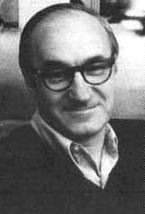
Erik Erikson

Unlike most developmental theories, psychoanalytic theory views adolescence as a time of regression rather than progression, at least at its onset. From the perspective of many psychoanalytic theories, the biological changes that occur with puberty bring about a regression from the emotional stability of the middle childhood period. The adolescent begins to show signs of experiencing stress and of giving up some of the accomplishments in education and social conformity that were achieved during the latency period. As a result, the adolescent manifests not only regressive tendencies but also a variety of defensive maneuvers to ward off the regressive pull.

Eric Fromm's perspective on adolescence has some unique features that have implications for understanding youth development. Fromm (1941) describes youth as being caught between their need for autonomy and their need for continued dependence. To escape this dilemma, they attempt to reduce freedom. They may do this by joining organizations that have specific behavioral expectations and demand conformity to those expectations; such organizations might include fraternities, gangs, religious sects, or the military. Youth also may attempt to reduce their freedom by engaging in actions that result in constraints or restrictions on their behaviors, such as marriage or parenthood.

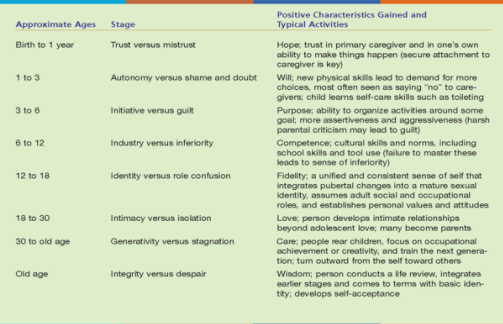
Some aspects of psychoanalytic theory have been incorporated into the youth development model. For one, Erikson's (1963, 1968) propositions regarding the development of a sense of industry or competency and a stable identity are key features to understanding youth development and therefore feature prominently in the model. Fromm's (1941) description of the need for adolescents to experience both autonomy and a sense of connectedness with significant others in their lives is consistent with the concept of individuation in the conceptual model.

Figure 3: Erik Ericson's Eight Psycho-social Stages of Human Development


The question that I would LOVE for you to address after reading this theories:

How does Ag Edu address these theories?
[Please comment on this blog post!]